
WORTH ANOTHER GO? THE EDITORIAL VERDICT
Wildfrost
A demanding deckbuilding return loop whose best lessons concern the exact timing and protection of a developing team.
Game facts
- Developer
- Deadpan Games, Gaziter
- Publisher
- Chucklefish
- Released
- 12 April 2023
- Platforms
- Windows (Steam edition)
- Model
- Paid game
- PEGI
- 7 — Nintendo Switch edition; not a separate PC classification
- Players
- Single-player
- Length
- Medium
- Difficulty
- 4 / 5 · Challenging
- Steam Deck
- Verified
PEGI source ↗ · Steam Deck status source ↗
Edition: Base game
The score, explained
The interest and responsiveness of the core decisions and actions.
How progression, exploration and goals fit together.
The coherence of the visual, musical and narrative presentation.
How clearly the game explains its rules and offers useful ways to engage.
The depth of optional goals, alternative approaches and reasons to return.
The next leader changes the opening plan
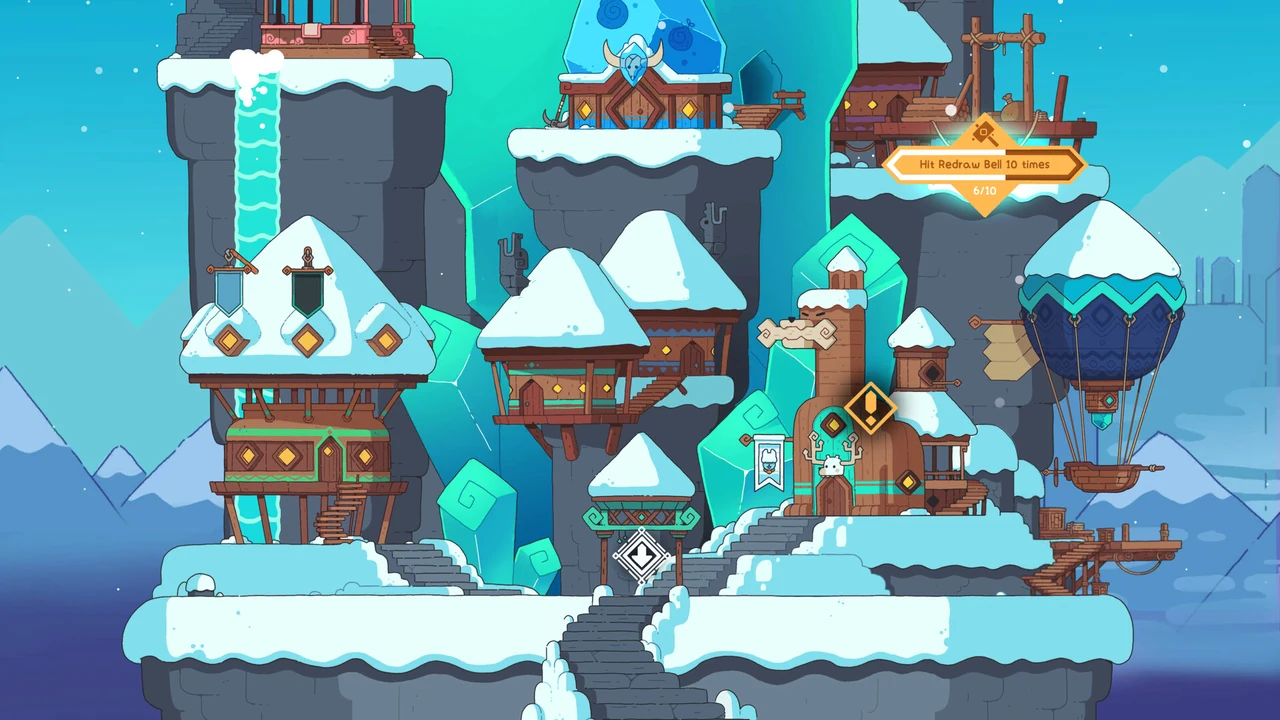
Wildfrost makes a fresh run begin with a meaningful identity choice. The selected leader and starting arrangement affect which companions and items are likely to support a useful plan, while the countdown system changes how every action should be valued. Playing a card is also a decision about which units are moving closer to their next automatic attack. That makes the opening encounters a place to establish timing rather than simply spend every available damage effect. Replay Brook's interest is in how quickly a new setup asks for different habits. A leader who benefits from one kind of support can make a familiar reward attractive for a new reason, turning the return to Snowdwell's surrounding dangers into a distinct experiment in sequencing and protection.
Companions make a run's rhythm visible
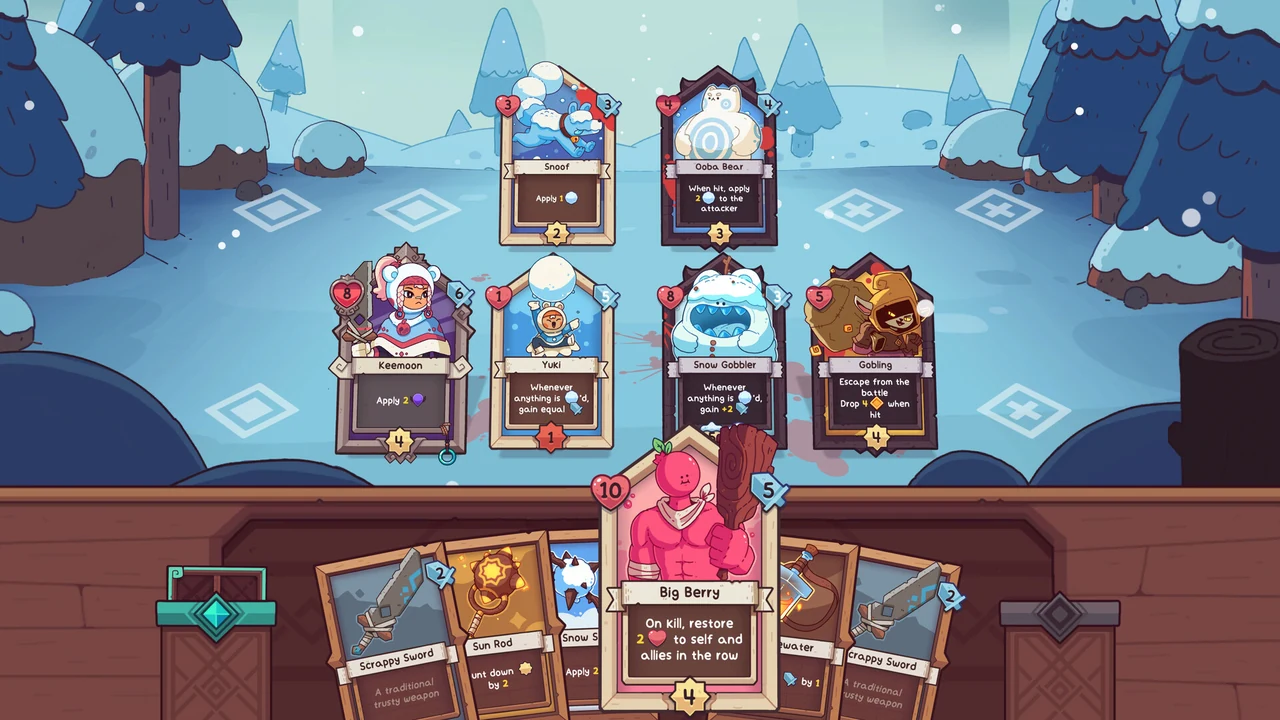
The placement and survival of companions matter because their counters and abilities create the pattern through which the deck operates. Moving a unit or deciding when to use an item can alter who attacks next and which threat remains active afterwards. Charms and new cards add further relationships, while town development creates opportunities that continue beyond a single attempt. This gives replay a useful combination of continuity and revision. The player can recognise a favourite effect without assuming it belongs in every deck, and a new companion can change how an earlier card should be used. The strongest runs feel coherent because several parts contribute to a shared rhythm, allowing a modest intervention to matter precisely because it happens at the right point in that sequence.
Small timing errors can have large costs
The countdown system is clear once understood, but its consequences can be unforgiving. A card that appears helpful in isolation may advance an enemy towards an attack before the board is ready to absorb it. Losing a key companion can then disrupt several planned interactions at once. Players who treat the game as a casual sequence of attractive cards may find that sharpness surprising. The run structure also means that a promising combination can disappear after a failed encounter, and the next set of rewards may not offer an immediate way to recreate it. Wildfrost works best when reviewing the order of actions is part of the enjoyment. Its appeal weakens if the visual warmth creates an expectation of consistently gentle tactical consequences.
Choose a return loop built around timing
Wildfrost is a good fit for players who want deckbuilding to include the management of a visible board. The counters make timing concrete, while companions give a run's success a more personal shape than a hand of abstract effects alone. Repeated attempts can reveal that an earlier failure came from sequence or placement rather than from needing a stronger reward. That makes improvement specific and useful. Choose it if you enjoy protecting a developing combination and adapting when the available cards suggest another direction. A more forgiving card game will suit someone who dislikes sudden losses. The distinctive replay value lies in hearing a new deck's rhythm, learning when its important actions arrive and arranging the smaller decisions so those moments can happen safely.
The verdict
A demanding deckbuilding return loop whose best lessons concern the exact timing and protection of a developing team.
Reasons to play
- Counters make sequence a visible resource
- Companions give combinations a physical place
- Leaders change the opening support priorities
Reasons to think twice
- Small timing errors can cost a key companion
- The cheerful appearance conceals sharp consequences
See the game
Assist & accessibility
Explore the available settings and control options on the official game page before choosing your setup.
Parents’ guide
Players: Single-player. No in-game purchase marker in the checked Steam listing. Separate downloadable content may be sold.
Age classification: 7. Nintendo Switch edition; not a separate PC classification
A useful starting tip
Check every relevant attack counter before spending a turn; the next automatic action may matter more than immediate damage.
A different direction
Compare this with Slay the Spire: An excellent repeat-run strategy game that rewards becoming less dependent on favourite cards and more attentive to the needs of the current deck.
Official sources
Reviewed: November 2026
You might also like
 HadesRead review →
 Dead CellsRead review →
 Enter the GungeonRead review →