WORTH ANOTHER GO? THE EDITORIAL VERDICT
Slay the Spire
An excellent repeat-run strategy game that rewards becoming less dependent on favourite cards and more attentive to the needs of the current deck.
Game facts
- Developer
- Mega Crit
- Publisher
- Mega Crit
- Released
- 23 January 2019
- Platforms
- Windows · macOS · Linux (Steam edition)
- Model
- Paid game
- PEGI
- 7 — Nintendo Switch edition; not a separate PC classification
- Players
- Single-player
- Length
- Medium
- Difficulty
- 4 / 5 · Challenging
- Steam Deck
- Verified
PEGI source ↗ · Steam Deck status source ↗
Edition: Base game
The score, explained
The interest and responsiveness of the core decisions and actions.
How progression, exploration and goals fit together.
The coherence of the visual, musical and narrative presentation.
How clearly the game explains its rules and offers useful ways to engage.
The depth of optional goals, alternative approaches and reasons to return.
Start again with a different idea of a good card
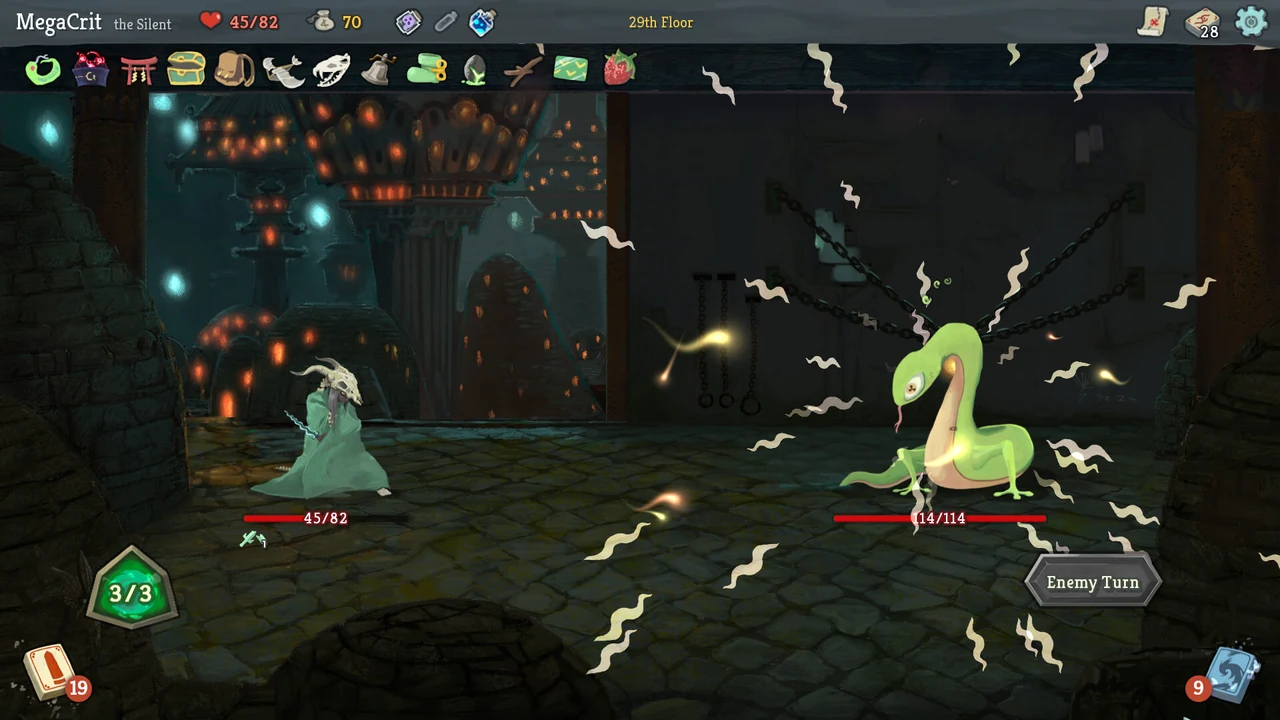
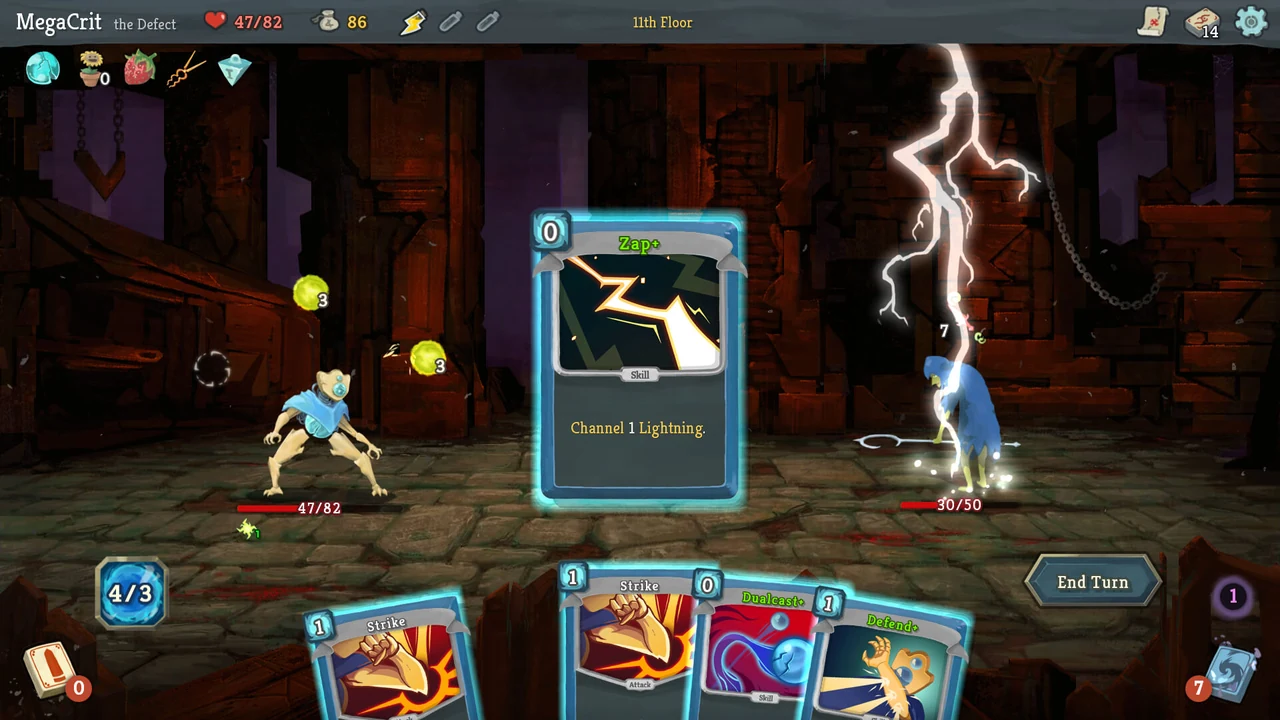
Slay the Spire keeps returning interesting by changing the context in which a card is evaluated. A familiar reward may be valuable in one deck and an unnecessary distraction in another, so knowledge does not reduce every choice to a permanent ranking. The character's starting tools, early relics and available route all influence what the next addition needs to accomplish. Replay Brook values this because a new attempt can begin with a changed understanding rather than merely a hope for better luck. The first fights reveal whether the deck has enough defence, damage and consistency for the route ahead. A useful lesson from the previous run becomes a question to test, giving the repeated ascent a clear purpose from its earliest rewards.
Difficulty exposes habits that once seemed reliable
Different characters already ask for different planning, and Ascension levels add further pressure once a basic victory is familiar. A deck that survives ordinary encounters comfortably may still lack an answer to a particular elite or boss, making route and reward decisions part of the same longer argument. Relics can encourage an unfamiliar direction, while the ability to decline a card makes restraint an active option. These systems give improvement a practical shape. The player becomes better at recognising what the current deck needs, rather than simply remembering which combinations can become spectacular in ideal circumstances. That is a strong foundation for repeated runs because the next attempt offers another chance to apply judgement to a new set of constraints, rewards and emerging weaknesses.
A loss can be difficult to diagnose honestly
Random draw order and reward offers are real influences, but they can also become convenient explanations for a deck that was assembled without enough resilience. Learning to separate those causes takes patience. The game provides clear information during battle, yet the decision that made a later encounter difficult may have happened several floors earlier. That delayed consequence can be fascinating or frustrating depending on how much reflection a player wants after failure. The presentation also remains relatively spare, with most of the excitement coming from interactions and close decisions. Someone seeking dramatic action or a continuing story may find little to carry them through an unsuccessful run. The repeat appeal is strongest when understanding why a plan failed is already a worthwhile result.
Return for a more adaptable understanding
Slay the Spire is a strong recommendation for players who enjoy becoming less dependent on a favourite strategy. Repeated attempts reveal that a reliable answer is often conditional, and that a modest choice can matter more than an impressive card selected without support. The different characters and rising challenge give those lessons several places to be tested. It suits a thoughtful pace and a willingness to inspect the history of a run rather than judge it only by its ending. A player who mainly wants permanent accumulation should choose another kind of RPG. Here, the most valuable thing preserved between ascents is a better sense of what a deck is missing, and the discipline to solve that problem before chasing the combination that looks most exciting.
The verdict
An excellent repeat-run strategy game that rewards becoming less dependent on favourite cards and more attentive to the needs of the current deck.
Reasons to play
- Context changes the value of familiar rewards
- Ascension exposes weaknesses in comfortable plans
- Declining cards makes restraint useful
Reasons to think twice
- A decisive mistake may happen long before defeat
- Sparse presentation leaves the systems to carry interest
See the game
Assist & accessibility
Parents’ guide
Players: Single-player. No in-game purchase marker in the checked Steam listing. Separate downloadable content may be sold.
Age classification: 7. Nintendo Switch edition; not a separate PC classification
A useful starting tip
Evaluate a card by the problem your current deck needs to solve, rather than adding every option that looks powerful alone.
A different direction
Compare this with Wildfrost: A demanding deckbuilding return loop whose best lessons concern the exact timing and protection of a developing team.
Official sources
Reviewed: November 2026
You might also like
 HadesRead review →
 Dead CellsRead review →
 Enter the GungeonRead review →