WORTH ANOTHER GO? THE EDITORIAL VERDICT
Hades
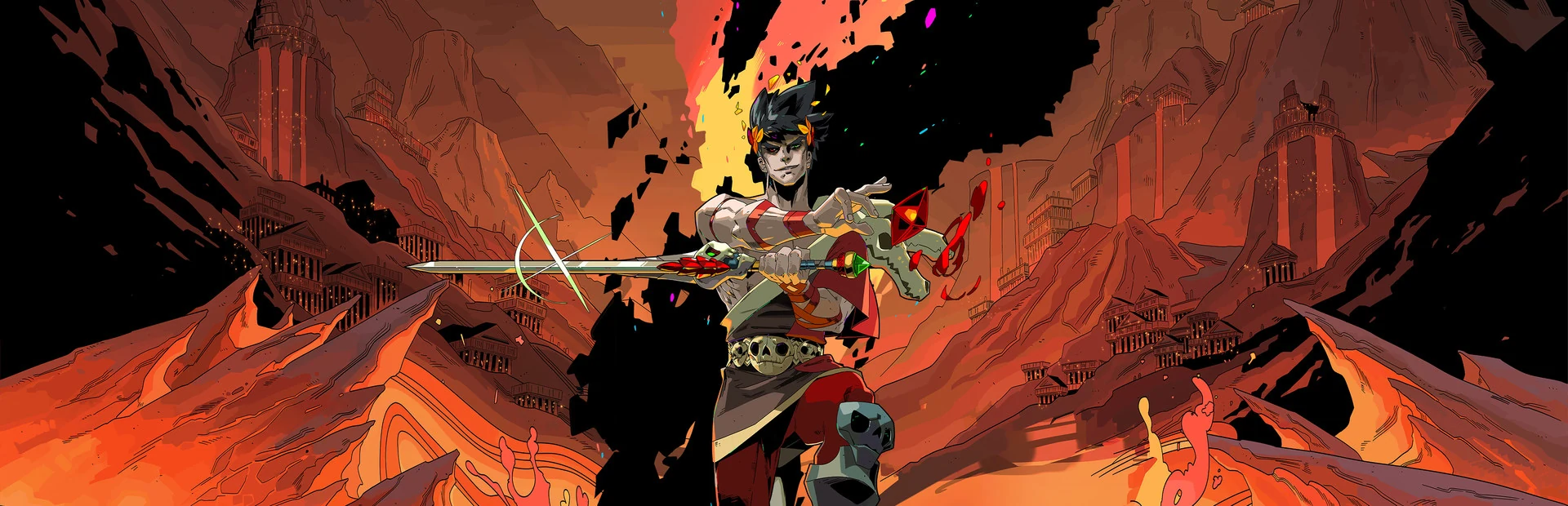
A rewarding return loop where changing weapons and boons tests growing combat skill while the household keeps developing around each attempt.
Game facts
- Developer
- Supergiant Games
- Publisher
- Supergiant Games
- Released
- 17 September 2020
- Platforms
- Windows · macOS (Steam edition)
- Model
- Paid game
- PEGI
- 12 — Nintendo Switch edition; not a separate PC classification
- Players
- Single-player
- Length
- Medium
- Difficulty
- 4 / 5 · Challenging
- Steam Deck
- Verified
PEGI source ↗ · Steam Deck status source ↗
Edition: Base game
The score, explained
The interest and responsiveness of the core decisions and actions.
How progression, exploration and goals fit together.
The coherence of the visual, musical and narrative presentation.
How clearly the game explains its rules and offers useful ways to engage.
The depth of optional goals, alternative approaches and reasons to return.
A familiar descent with a different set of tools
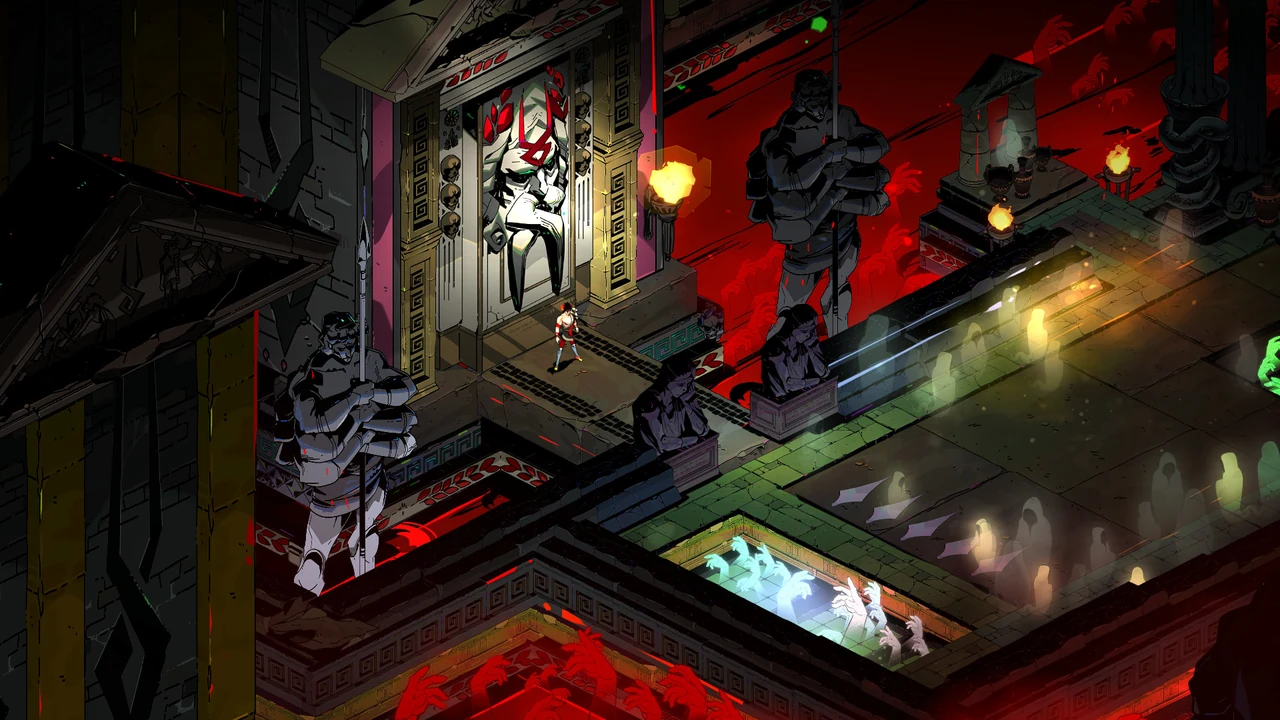
Hades makes the first reason for another run immediately practical: Zagreus can leave home with a different Infernal Arm and discover a different combination of Olympian boons. A weapon changes the distance, commitment and rhythm of attacks before any reward appears. The rooms of Tartarus then provide an early opportunity to see whether the emerging setup supports that approach. For Replay Brook, the attraction is how quickly a return can become a distinct experiment. Familiar surroundings make the effect of a changed tool easier to recognise, rather than simply making the opening feel repeated. The player is learning a route and a combat language together, with each new attempt offering another way to test how well those two kinds of knowledge have developed.
The game keeps more than one kind of progress
The Mirror of Night and other improvements provide continuity between escapes, while relationships at the House continue developing even after a run ends unsuccessfully. That gives a return several possible purposes. You might be exploring a weapon, pursuing a conversation or testing a combination that became available through an earlier unlock. Daedalus Hammer upgrades can alter an arm substantially during the attempt itself, preventing the initial choice from determining every later decision. The Pact of Punishment then offers additional constraints once the main escape structure is familiar. These layers are effective because they address different stages of learning. Early continuity helps establish confidence, while later challenges ask whether a comfortable strategy still works when part of its usual advantage has been removed.
Repetition still needs an enjoyable combat foundation
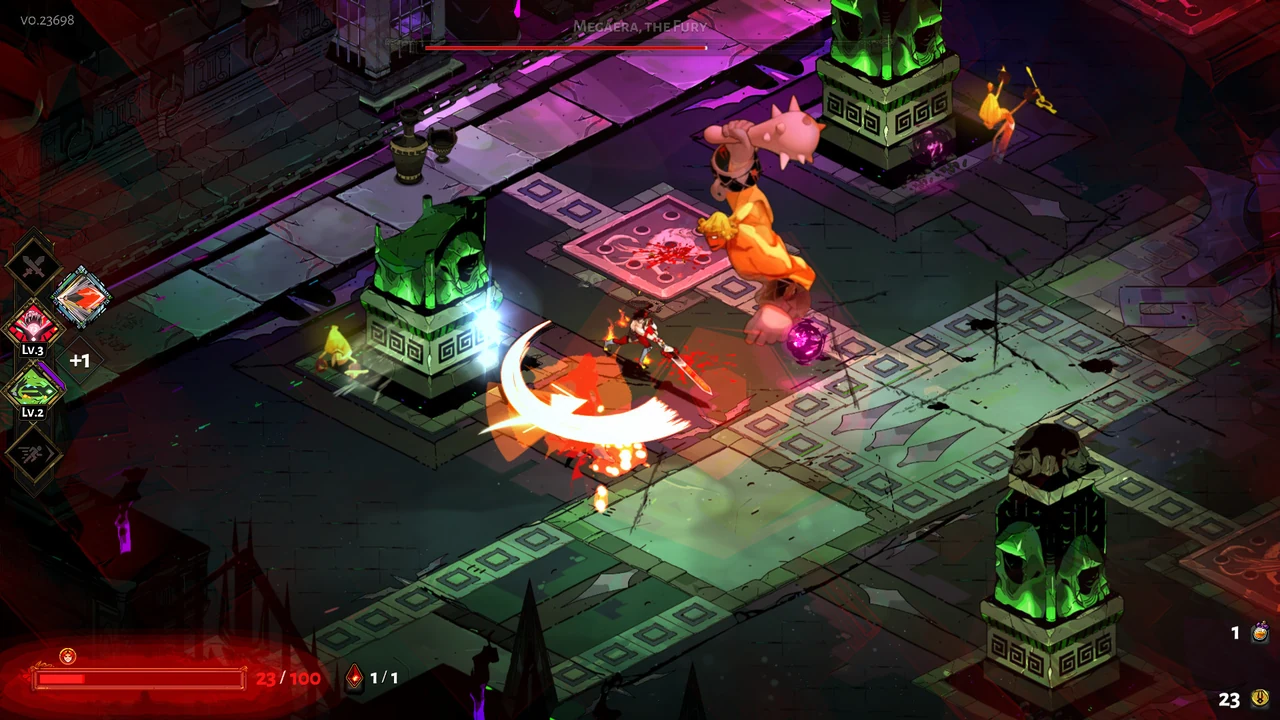
New dialogue and rewards cannot make repeated rooms appealing if the movement and fighting do not suit the player. Hades asks for sustained awareness of attacks, positioning and the available space, particularly when several threats overlap. A desired boon combination is also an opportunity rather than a promise, so insisting on one ideal setup can make ordinary rewards feel disappointing. The strongest approach is to recognise a useful direction and adapt as the run develops. Players who mainly want to reach the next story revelation may find the repeated combat too prominent. The return loop works best when executing a familiar encounter more confidently is already satisfying, giving the narrative and progression systems something enjoyable to support rather than asking them to compensate for an unwanted activity.
Return for a sharper version of a familiar skill
Hades is a strong choice when you want repeat play to combine mechanical practice with a continuing sense of place. The House gives the journey a stable social centre, while weapons and boons make departures variable enough to invite experimentation. It is particularly rewarding to recognise that an enemy pattern once treated as an obstacle has become an opportunity for a different attack. That kind of improvement survives the end of a run even when its particular build disappears. Choose it if learning, improvising and returning to familiar characters can all be part of the appeal. A more linear action adventure will suit players who want progress expressed mainly through new locations. Here, a known route becomes valuable because you are increasingly capable of approaching it in different ways.
The verdict
A rewarding return loop where changing weapons and boons tests growing combat skill while the household keeps developing around each attempt.
Reasons to play
- Weapons make a return immediately different
- Hammer upgrades reshape a run's direction
- Relationships preserve continuity after defeat
Reasons to think twice
- Familiar rooms remain the foundation
- A desired boon combination is never assured
See the game
Assist & accessibility
Parents’ guide
Players: Single-player. No in-game purchase marker in the checked Steam listing. Separate downloadable content may be sold.
Age classification: 12. Nintendo Switch edition; not a separate PC classification
A useful starting tip
Choose boons that support the weapon and effects already defining the run, rather than treating each offered power as an isolated upgrade.
A different direction
Compare this with Hades II: A layered action loop that makes returning an opportunity to connect a revised setup with more confident control of space and Magick.
Official sources
Reviewed: November 2026
You might also like
 Dead CellsRead review →
 Enter the GungeonRead review →
 Hades IIRead review →