
WORTH ANOTHER GO? THE EDITORIAL VERDICT
Dead Cells
A sharp action roguelite whose repeat value begins with the feel of a new weapon and grows through routes, unlocks and rising pressure.
Game facts
- Developer
- Motion Twin
- Publisher
- Motion Twin
- Released
- 6 August 2018
- Platforms
- Windows · macOS · Linux (Steam edition)
- Model
- Paid game
- PEGI
- 16 · Violence — Steam UK listing
- Players
- Single-player
- Length
- Medium
- Difficulty
- 4 / 5 · Demanding
- Steam Deck
- Verified
PEGI source ↗ · Steam Deck status source ↗
Edition: Base game
The score, explained
The interest and responsiveness of the core decisions and actions.
How progression, exploration and goals fit together.
The coherence of the visual, musical and narrative presentation.
How clearly the game explains its rules and offers useful ways to engage.
The depth of optional goals, alternative approaches and reasons to return.
The next weapon changes the next attempt
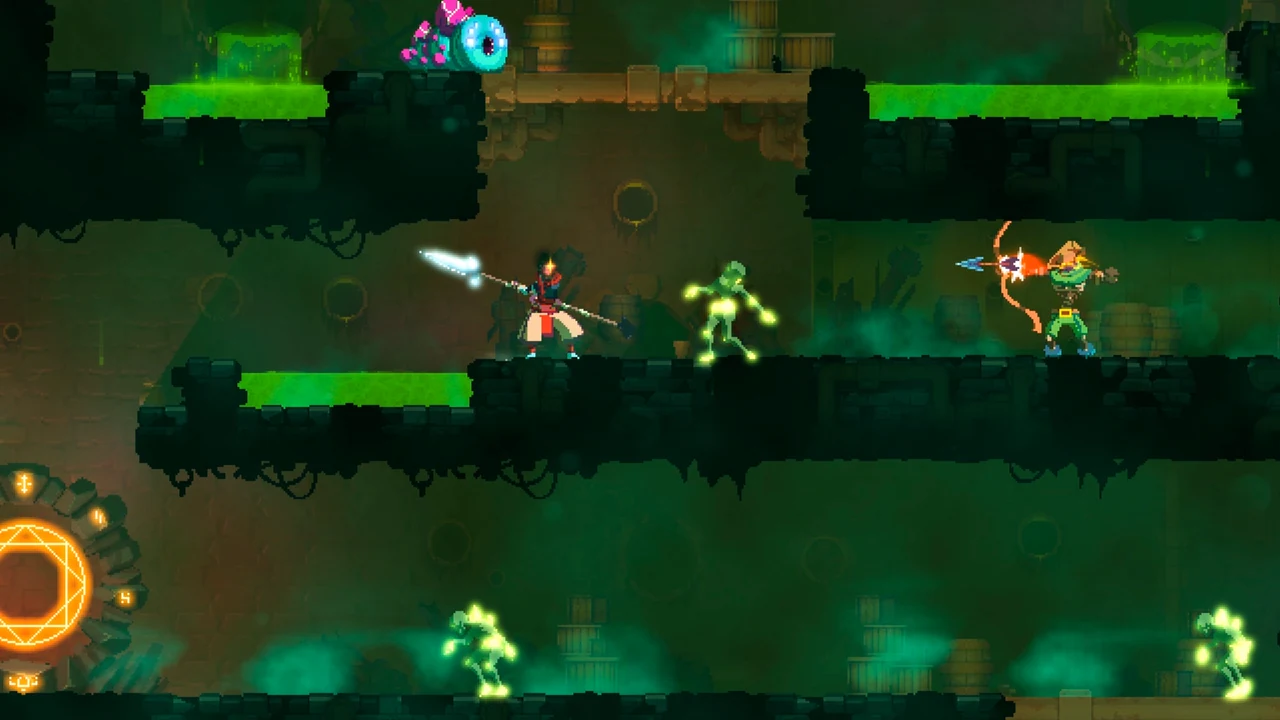
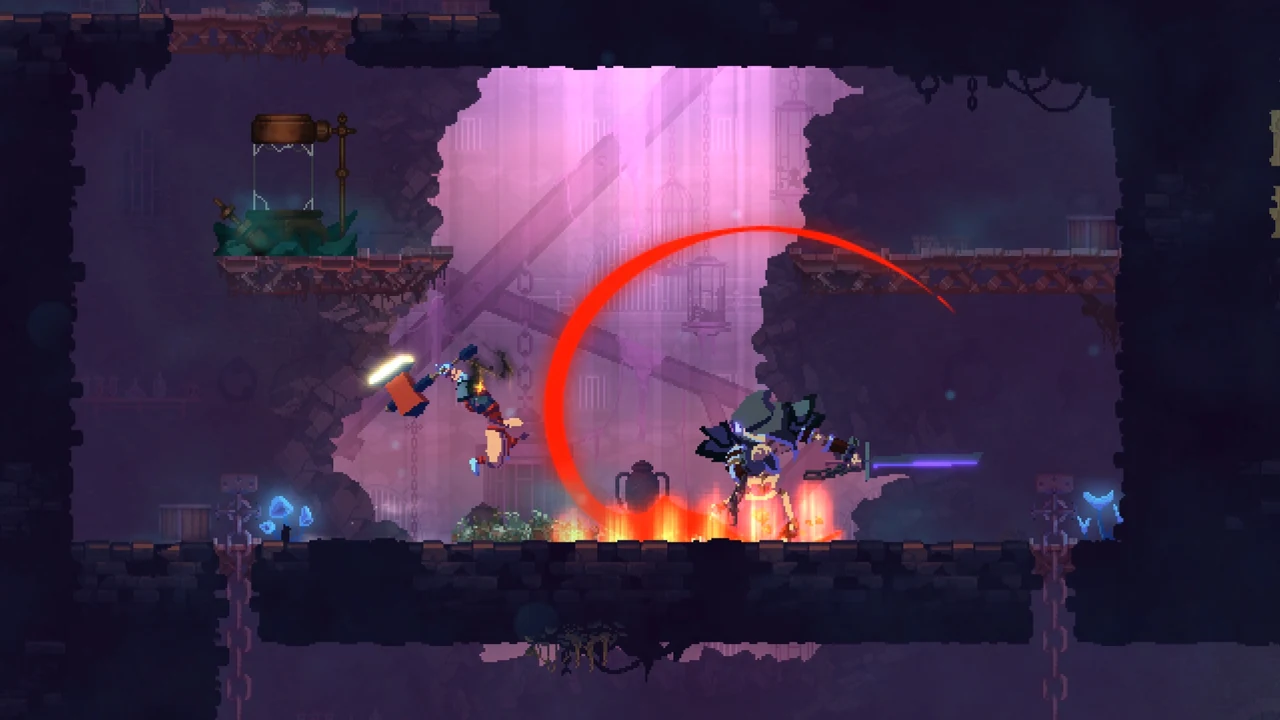
Dead Cells gives a fresh run a strong physical identity through its equipment. A close-range weapon, a ranged option or a particular skill changes how the Prisoner wants to enter a room and handle a group of enemies. The opening areas become a useful place to feel that difference, with quick movement keeping the route active even when the geography is familiar. Replay Brook's interest is in this immediate relationship between variation and action. The player does not need to reach a distant endgame before a changed loadout becomes meaningful. An unfamiliar tool asks for another habit now, making a repeated corridor a small test of whether the chosen equipment and the way it is being used actually suit one another.
Routes and unlocks give repetition a direction
Branching biome paths let a run develop along different routes, while runes gradually expand the places that can be reached. Blueprints and unlocks create longer-term reasons to explore, but surviving the current journey still depends on handling its enemies and hazards. Equipment interactions encourage a build to become more coherent as rewards appear. After a successful completion, Boss Stem Cells increase the demand and alter the conditions under which familiar routes are attempted. This gives repeat play a progression beyond simply collecting another weapon. The player is asked to use growing knowledge under less forgiving circumstances, while the route structure and available equipment continue supplying reasons to reconsider a comfortable approach. Familiarity becomes useful preparation rather than an automatic solution to the next run's problems.
The learning curve can turn sharp
Dead Cells is fast enough that an apparently strong run can deteriorate quickly when several mistakes arrive together. The loss of a promising setup can feel especially frustrating if a difficult encounter appears before the player has learned how it works. Its increasing challenge also means that early comfort does not necessarily predict how enjoyable later difficulty levels will be. The game offers a large amount to unlock, but collecting options is not the same as enjoying every option placed in the reward pool. Players should be willing to judge a weapon by its actual behaviour rather than its novelty. The strongest fit is someone who likes practising under pressure and can see a failed attempt as part of that process, even when the immediate loss is disappointing.
For players who want action to remain the reward
Choose Dead Cells when responsive movement and combat are enough to make a familiar route worth another visit. Its unlocks, branches and difficulty progression give that action structure, but the central pleasure remains the feel of getting through a dangerous place with the tools currently available. It suits players who enjoy trying equipment in practice and discovering how a small change alters their preferred distance or timing. A story-led adventure will offer more continuity for someone who dislikes restarting after a defeat. Within this selection, Dead Cells provides a particularly direct form of replay value: the next attempt begins quickly, a weapon gives it a new character, and the improvement that matters most is how confidently the player can turn that equipment into a workable fighting style.
The verdict
A sharp action roguelite whose repeat value begins with the feel of a new weapon and grows through routes, unlocks and rising pressure.
Reasons to play
- Equipment immediately changes combat habits
- Biome branches give runs different routes
- Boss Stem Cells test established knowledge
Reasons to think twice
- Promising runs can collapse quickly
- Later difficulty changes the level of commitment
See the game
Assist & accessibility
Explore the available settings and control options on the official game page before choosing your setup.
Parents’ guide
Players: Single-player. No in-game purchase marker in the checked Steam listing. Separate downloadable content may be sold.
Age classification: 16. Violence Steam UK listing
A useful starting tip
Choose equipment that supports a recognisable combat approach, then use route knowledge to avoid fighting in positions that undermine it.
A different direction
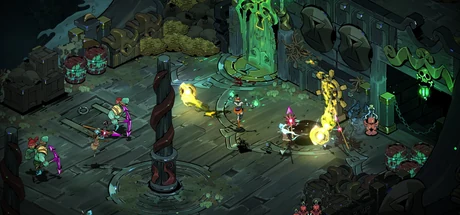
Compare this with Hades: A rewarding return loop where changing weapons and boons tests growing combat skill while the household keeps developing around each attempt.
Official sources
Reviewed: November 2026
You might also like
 HadesRead review →
 Enter the GungeonRead review →
 Hades IIRead review →