
WORTH ANOTHER GO? THE EDITORIAL VERDICT
Vampire Survivors
An immediately engaging experiment loop that turns new characters, stages and equipment relationships into clear reasons to begin again.
Game facts
- Developer
- poncle
- Publisher
- poncle
- Released
- 20 October 2022
- Platforms
- Windows · macOS (Steam edition)
- Model
- Paid game
- PEGI
- 12 — Nintendo Switch edition; not a separate PC classification
- Players
- Single-player · Multi-player · Co-op · Online Co-op
- Length
- Short
- Difficulty
- 2 / 5 · Moderate
- Steam Deck
- Verified
PEGI source ↗ · Steam Deck status source ↗
Edition: Base game
The score, explained
The interest and responsiveness of the core decisions and actions.
How progression, exploration and goals fit together.
The coherence of the visual, musical and narrative presentation.
How clearly the game explains its rules and offers useful ways to engage.
The depth of optional goals, alternative approaches and reasons to return.
Movement gives a crowded screen a simple purpose
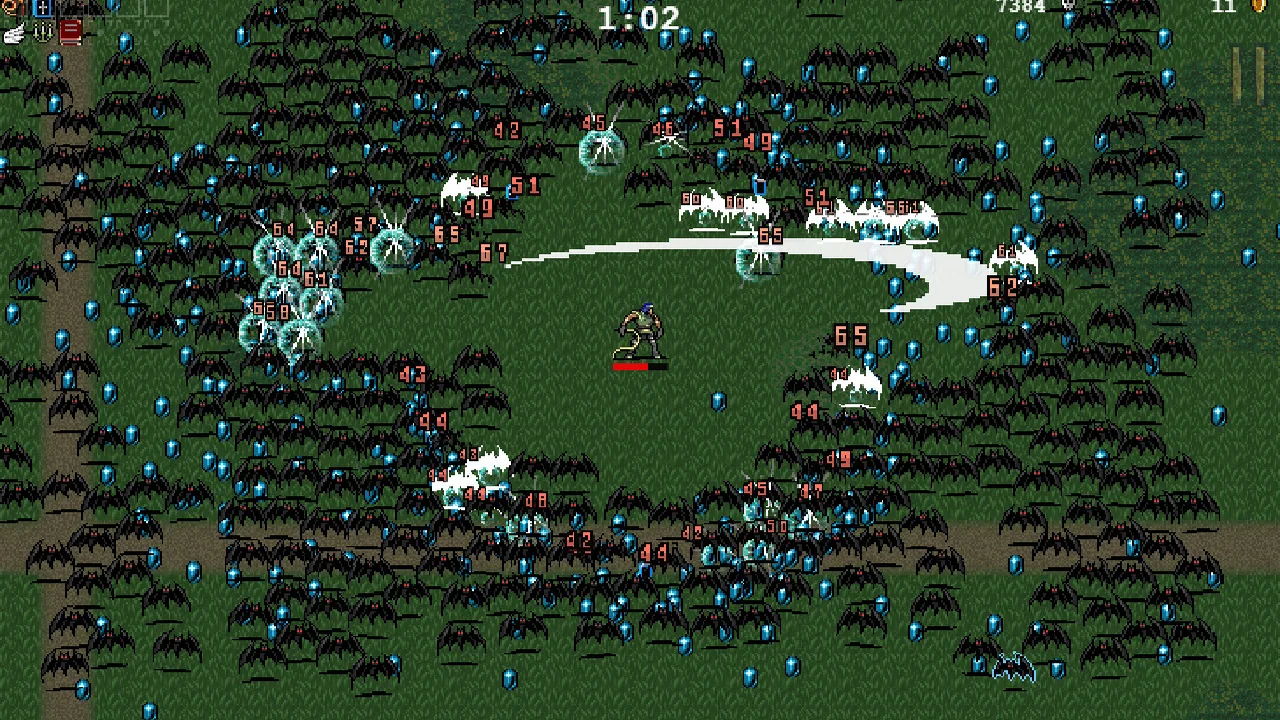
Vampire Survivors begins with a character moving through enemies while weapons attack automatically. That division of control makes positioning the immediate task: collect experience, avoid being surrounded and create enough space for the current weapons to keep working. A new character changes the starting situation, while level-up choices gradually determine how the run will handle a larger crowd. Replay Brook values how little delay separates beginning an attempt from making consequential decisions. The basic action remains easy to understand even as the screen becomes busier. The question is whether the player can keep a useful route open long enough for the developing collection of weapons and passive effects to become a system that handles threats more effectively than the character could at the start.
Unlocks make the next experiment easy to imagine
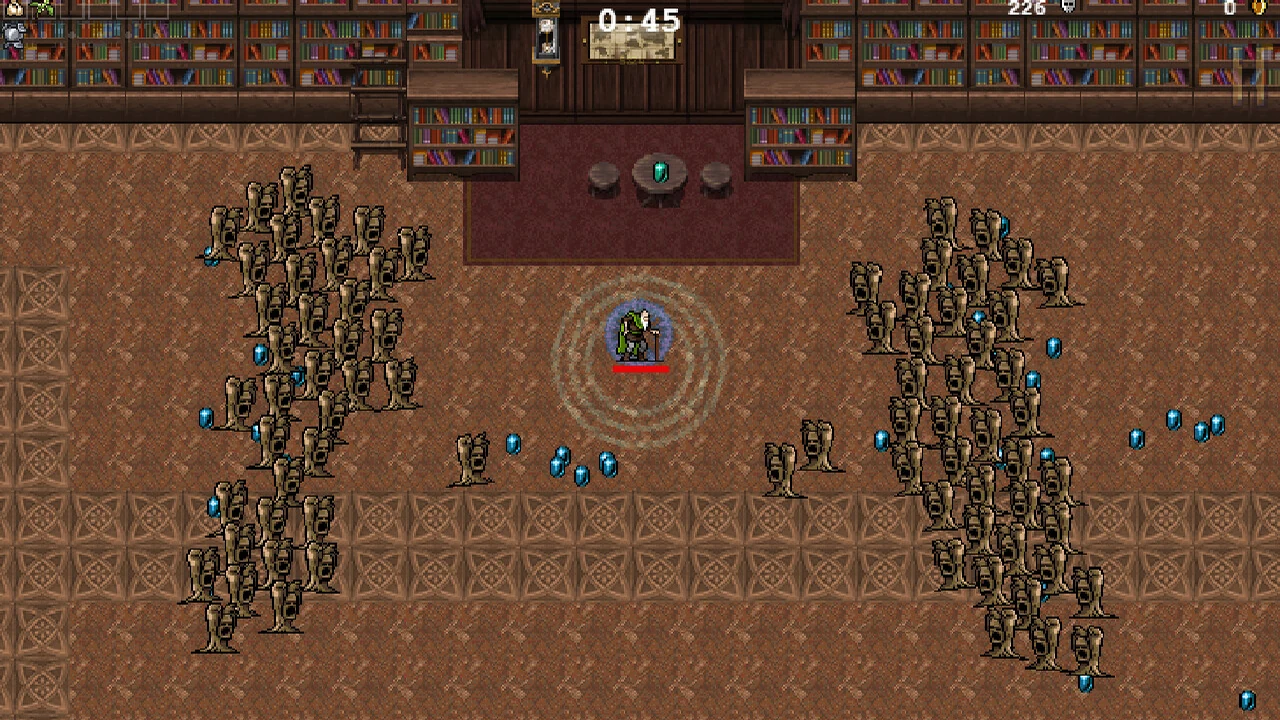
New characters, weapons and stages provide clear reasons to return, while weapon evolutions encourage learning relationships between equipment choices. A discovery can immediately suggest another run built around a different combination. The stages also change the space available for movement, influencing how an otherwise familiar setup feels in practice. Permanent upgrades support progression, but the moment-to-moment identity of a run still comes from its selected tools and the way the player moves through accumulating threats. This is a strong replay structure because it keeps the next idea visible. Completing an objective or discovering an interaction does not merely add another entry to a list; it often supplies a concrete answer to the question of what to try when starting again with a different character or stage.
Spectacle can make individual decisions harder to read
As weapons and enemies multiply, the display can become dense enough that the contribution of a particular effect is difficult to isolate. That abundance is part of the game's appeal, but players who prefer precise control over every attack may find the automatic combat distant. The early process of collecting experience and building strength also remains a repeated foundation, even when unlocks offer new possibilities. A large number of objectives can encourage completion for its own sake rather than interest in the next experiment. The recommendation is strongest when discovering a combination and watching it operate is already satisfying. Someone looking for a substantial authored story or detailed tactical command of a party will find a much narrower activity beneath the impressive accumulation of effects.
Return for an immediately understandable experiment
Choose Vampire Survivors when you want a new run to present a clear idea quickly: another character, another stage or another relationship between weapons. Its automatic attacks keep attention on movement and selection, making the growing setup easy to engage with even before every interaction is understood. The unlock structure supplies a broad sequence of experiments without requiring a complex narrative explanation for each return. It is especially suitable for players who enjoy visible escalation and the discovery of combinations that make a crowded situation manageable. Readers seeking exact control or a quiet screen should consider other options. The central pleasure is straightforward but durable: begin with limited coverage, make a series of useful choices and see whether the resulting arrangement can keep creating space as the pressure builds.
The verdict
An immediately engaging experiment loop that turns new characters, stages and equipment relationships into clear reasons to begin again.
Reasons to play
- Unlocks suggest practical next-run ideas
- Evolutions reward learning equipment relationships
- Positioning stays central despite automatic attacks
Reasons to think twice
- Dense effects can obscure individual contributions
- The early build-up remains a repeated foundation
See the game
Assist & accessibility
Explore the available settings and control options on the official game page before choosing your setup.
Parents’ guide
Players: Single-player · Multi-player · Co-op · Online Co-op. No in-game purchase marker in the checked Steam listing. Separate downloadable content may be sold.
Age classification: 12. Nintendo Switch edition; not a separate PC classification
A useful starting tip
Develop a small number of complementary offensive options before spreading upgrades across every available direction.
A different direction
Compare this with Brotato: Choose Brotato for short arena waves and frequent build decisions between rounds. Character restrictions and frequent shop decisions keep the build puzzle visible throughout each short attempt.
Official sources
Reviewed: November 2026
You might also like
 HadesRead review →
 Dead CellsRead review →
 Enter the GungeonRead review →