
WORTH ANOTHER GO? THE EDITORIAL VERDICT
FTL: Faster Than Light
A gripping expedition loop in which the ship's identity, uncertain opportunities and emergency decisions create a memorable account of each attempt.
Game facts
- Developer
- Subset Games
- Publisher
- Subset Games
- Released
- 14 September 2012
- Platforms
- Windows · macOS · Linux (Steam edition)
- Model
- Paid game
- PEGI
- 12 · Bad Language — Steam UK listing
- Players
- Single-player
- Length
- Medium
- Difficulty
- 4 / 5 · Demanding
- Steam Deck
- Playable
PEGI source ↗ · Steam Deck status source ↗
Edition: Base game
The score, explained
The interest and responsiveness of the core decisions and actions.
How progression, exploration and goals fit together.
The coherence of the visual, musical and narrative presentation.
How clearly the game explains its rules and offers useful ways to engage.
The depth of optional goals, alternative approaches and reasons to return.
The ship gives a fresh run a working identity
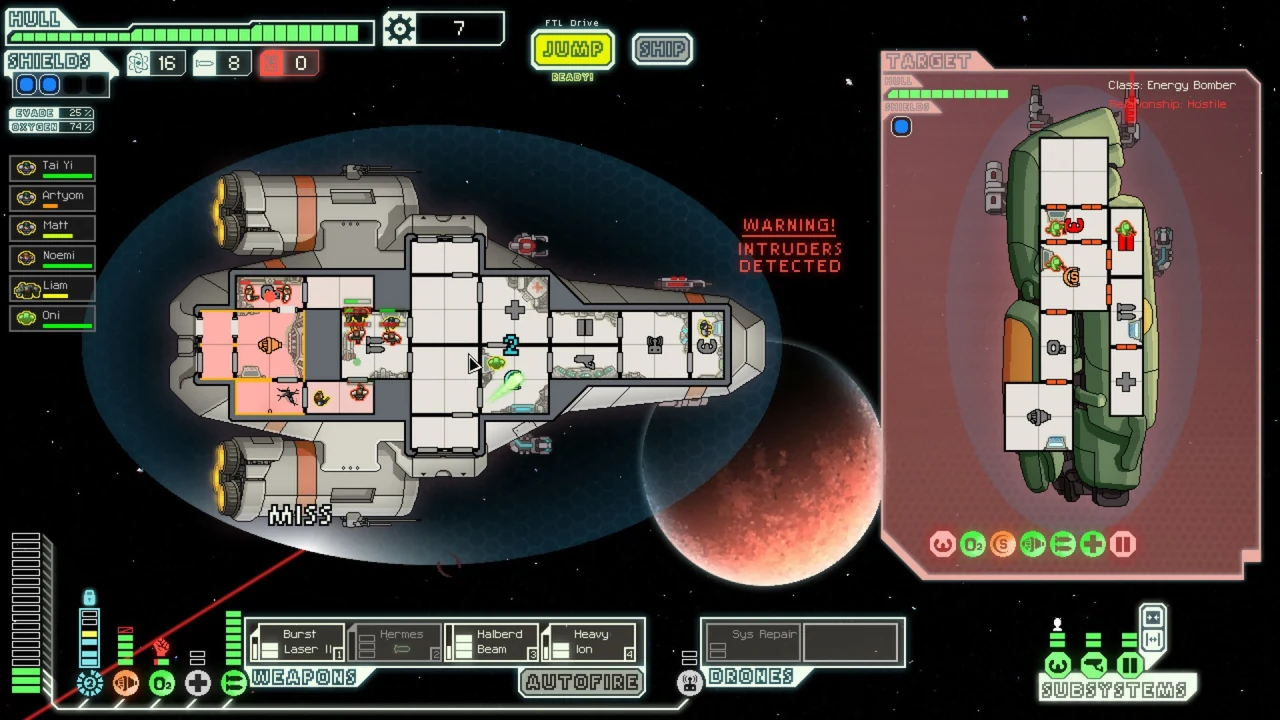
FTL begins with a ship whose layout, crew and equipment establish a particular set of strengths and vulnerabilities. A different vessel can change how the opening encounters should be approached, making another journey more than a new sequence of text events. Combat then asks the player to distribute attention among weapons, shields, repairs, crew safety and power. Pausing gives room to consider those responsibilities, but the relationships between them remain urgent. Replay Brook values the way a run develops a recognisable operational style. A ship built around one form of attack needs support that another vessel may not prioritise, so the first useful purchase or upgrade depends on what the current craft can already do and where its weaknesses are likely to become dangerous.
The route keeps the plan provisional
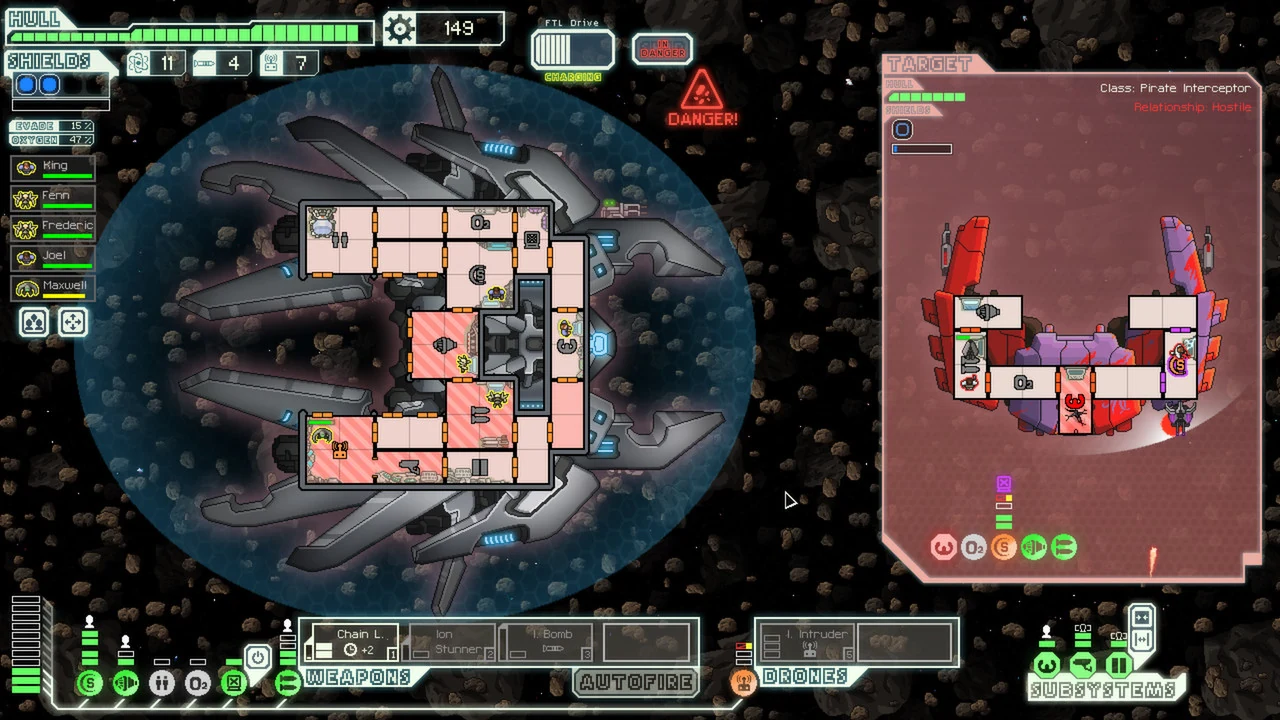
Moving between beacons creates opportunities to gather resources, meet events and improve the ship, while the advancing Rebel fleet limits how long a sector can be explored. That pressure makes route selection a risk calculation. Another stop might provide a useful reward, but it can also cost fuel, hull or a crew member needed later. Shops and equipment offers require the same flexibility: the ideal component may never appear, so a workable plan must develop around the tools actually obtained. Different ships and unlocks extend those possibilities across repeated journeys. The game's strongest loop comes from that negotiation between an initial identity and an improvised response, allowing a familiar vessel to end one run operating quite differently from the way it handled its first encounter.
An expedition can unravel quickly
FTL can be punishing when several ship systems fail at once. A fire, a damaged oxygen room or a badly timed enemy volley can turn a manageable fight into a crisis, and an event may offer uncertain outcomes despite careful resource management. Permanent loss gives those situations weight, but it can also make a promising journey feel abruptly wasted. The interface asks the player to keep several small details in view, especially while deciding what deserves repair or power first. This is a stronger fit for someone who enjoys managing emergencies than for a player seeking a relaxed trip through space. The pause function provides time to think, but it does not remove the need to make difficult decisions about a ship whose available resources cannot satisfy every demand simultaneously.
Return to command a different kind of expedition
Choose FTL when the story of how a run went matters as much as whether it reached the end. A crew loss, an unexpected weapon or a desperate repair can become the event that defines the journey, giving its procedural structure a concrete narrative of survival. Ship differences make new attempts substantial, while increasing knowledge helps the player recognise trouble earlier. It suits an attentive pace and a willingness to accept that preparation reduces risk without removing it. Players who want permanent character growth or a predictable campaign should choose another direction. The recurring pleasure is taking responsibility for a fragile collection of people and systems, adapting it to uncertain opportunities, and discovering whether that particular arrangement can remain functional for one more sector.
The verdict
A gripping expedition loop in which the ship's identity, uncertain opportunities and emergency decisions create a memorable account of each attempt.
Reasons to play
- Different vessels establish different priorities
- The Rebel fleet gives routes pressure
- Pausing supports thoughtful crisis management
Reasons to think twice
- Several failures can cascade abruptly
- Permanent loss can end a promising journey
See the game
Assist & accessibility
Explore the available settings and control options on the official game page before choosing your setup.
Parents’ guide
Players: Single-player. No in-game purchase marker in the checked Steam listing. Separate downloadable content may be sold.
Age classification: 12. Bad Language Steam UK listing
A useful starting tip
Pause when several systems fail at once, then decide which problem threatens the whole ship before assigning every crew member a separate repair.
A different direction
Compare this with Into the Breach: A precise tactical loop where another squad tests whether a lesson from the previous timeline can become a flexible habit.
Official sources
Reviewed: November 2026
You might also like
 HadesRead review →
 Dead CellsRead review →
 Enter the GungeonRead review →